


EMI Coating vs Conductive Paint: Which Is Better for Military Electronics?
- Home 〉
- FAQ 〉
- Surface Treatment & Coating 〉
- EMI Coating vs Conductive Paint: Which Is Better for Military Electronics?
EMI Coating vs Conductive Paint: Which Is Better for Military Electronics?
EMI coating is not automatically better than conductive paint, and conductive paint is not always the lower-performance choice.
For military electronics, communication equipment, rugged electronic housings and other EMC-sensitive products, the correct shielding solution should be selected according to the required shielding effectiveness, operating frequency range, substrate, enclosure design, grounding strategy, durability requirements, production volume, repairability and total manufacturing cost.
Table of Contents
- What Is the Difference Between EMI Coating and Conductive Paint?
- EMI Coating vs Conductive Paint: Quick Comparison
- Is EMI Coating Better for Military Electronics?
- What Should Engineers and Buyers Compare Before Selecting an EMI Shielding Process?
- How Should EMI Performance Be Validated for Military or Defense Applications?
- Frequently Asked Questions
- SSB Technical Scope in EMI Shielding and Surface Engineering
- Conclusion: Select EMI Shielding by Required Performance, Not by Process Name
What Is the Difference Between EMI Coating and Conductive Paint?
Plastic housings are widely used in electronic products because they are lightweight, flexible in design and suitable for mass production. However, most conventional plastics are electrically non-conductive and therefore do not provide the same inherent electromagnetic shielding behavior as a metal enclosure.
A conductive surface layer can therefore be applied to the plastic enclosure to help control electromagnetic interference. Two commonly considered approaches are conductive paint for EMI shielding and vacuum-deposited EMI coating, such as vacuum metallizing or sputtering.
Although both approaches are designed to create an electrically conductive shielding layer, their production methods, thickness control, repairability, durability and investment requirements can be different.
EMI Coating vs Conductive Paint: Quick Comparison
| Evaluation Factor | Conductive Paint / EMI Painting | Vacuum-Deposited EMI Coating |
|---|---|---|
| Process | Conductive material is applied by spraying or another coating method. | Conductive metal film is deposited under vacuum by processes such as sputtering or vacuum metallizing. |
| Initial investment | Generally lower process-equipment investment and relatively flexible production setup. | Usually requires vacuum equipment and more controlled process conditions. |
| Film uniformity | Depends strongly on paint formulation, spray control, geometry and operator or automation consistency. | Vacuum processes can provide highly controlled thin-film deposition when the chamber, fixturing and process parameters are properly designed. |
| Repairability | Local repair or reapplication can be comparatively straightforward depending on the coating system. | Rework may require surface preparation and reprocessing through the vacuum coating workflow. |
| Conductive materials | Common formulations may use conductive fillers such as silver, copper or nickel. | Metal layers may use materials such as aluminum, copper, nickel or multilayer conductive structures depending on design requirements. |
| Durability | Depends on binder system, film thickness, substrate preparation and environmental exposure. | Can provide stable thin-film performance, but adhesion, oxidation and protection-layer requirements must still be considered. |
| Best use case | Projects prioritizing production flexibility, repairability, lower initial investment or specific conductive-paint characteristics. | Projects requiring controlled thin-film deposition, repeatability, functional surface engineering or integration with other vacuum coating layers. |
Important: The table above is a process-selection reference, not a universal performance ranking. An optimized conductive paint can outperform a poorly designed vacuum coating, while a properly engineered vacuum coating may provide advantages in uniformity, repeatability or layer integration. Final performance must be validated under the actual product design and test conditions.
Is EMI Coating Better for Military Electronics?
For military electronics, wearable devices, communication equipment, rugged electronic housings and other high-reliability applications, the decision should not begin with the question, "Which coating technology is more advanced?"
A better engineering question is:
What shielding performance, frequency range, environmental reliability and manufacturing repeatability does the finished product actually require?
Vacuum-deposited EMI coating may be particularly attractive when a project requires controlled conductive thin films, repeatable coating structures, integration with protective layers or other functional coatings, and consistent mass-production processing.
Conductive paint can remain a practical solution when the product requires process flexibility, field or local repairability, relatively simple production equipment, or when the required electrical and environmental performance can already be achieved reliably by the selected paint system.
What Should Engineers and Buyers Compare Before Selecting an EMI Shielding Process?
For B2B procurement and engineering teams, coating price alone is not enough to make a reliable decision. The following factors should be confirmed before selecting an EMI shielding solution:
- Required shielding effectiveness: What attenuation performance must the finished product achieve?
- Frequency range: At which operating and interference frequencies must shielding performance be maintained?
- Substrate: ABS, PC, PC/ABS, engineering plastic, composite material or metal.
- Enclosure geometry: Openings, seams, ribs, screw bosses, connector areas and internal structures can affect shielding continuity.
- Grounding design: The conductive coating must work together with the overall grounding and enclosure architecture.
- Environmental requirements: Temperature cycling, humidity, corrosion, abrasion and long-term aging requirements.
- Production volume: Prototype, low-volume production or stable mass production.
- Repairability: Whether local repair, rework or recoating is required.
- Total manufacturing cost: Equipment, coating material, masking, cycle time, inspection, rework and defect cost.
Does Lower Surface Resistance Always Mean Better EMI Shielding?
No. Surface resistance is an important electrical property, but it should not be used as the only indicator of finished-product EMI shielding performance.
Actual shielding performance can also be influenced by conductive material, coating continuity, film thickness, frequency, enclosure geometry, openings, seams, grounding contact and the overall EMC design of the product.
This means two coating systems with similar resistance values can still produce different shielding results once they are applied to real electronic housings.
How Should EMI Performance Be Validated for Military or Defense Applications?
Military and defense-related electronics should be evaluated according to the actual program, contract and product-level EMC requirements rather than assuming that a particular coating technology automatically meets a military standard.
For example, MIL-STD-461H addresses electromagnetic interference emission and susceptibility requirements for applicable equipment and subsystems. It is not a coating-specific certification.
Depending on what is being evaluated, shielding-effectiveness test methods may also differ. Planar shielding materials and complete electronic enclosures should not automatically be evaluated using the same method.
Procurement recommendation: Before requesting a coating thickness or resistance value from a supplier, define the required EMC performance, frequency range, environmental test conditions, substrate, enclosure design and acceptance method.
Frequently Asked Questions
Q: Is EMI coating always better than conductive paint?
No. The best process depends on the required shielding effectiveness, frequency range, substrate, durability, repairability, production volume and manufacturing cost. Vacuum-deposited coatings can offer advantages in thin-film control and repeatability, while conductive paint can offer flexibility and easier local repair for suitable applications.
Q: Is lower surface resistance always equal to better EMI shielding?
No. Surface resistance is only one factor. Finished-product shielding can also depend on coating continuity, frequency, enclosure geometry, seams, openings, grounding and the overall EMC design.
Q: Does an EMI coating automatically meet MIL-STD-461?
No. MIL-STD-461H addresses electromagnetic interference characteristics of applicable equipment and subsystems; it does not certify an EMI coating or conductive paint by itself. Compliance must be evaluated at the required equipment or subsystem level according to the applicable program and verification requirements.
Q: Can plasma cleaning replace EMI coating?
No. Plasma cleaning is a surface-preparation process rather than an EMI shielding layer. It may be used to remove surface contaminants and prepare a substrate before coating when required by the selected manufacturing process.
Why Surface Preparation Matters Before EMI Coating
Regardless of whether conductive paint or a vacuum-deposited coating is selected, the surface condition of the substrate can influence coating adhesion and production stability.
Contamination such as mold-release residue, grease and other surface contaminants may need to be controlled before subsequent coating or metallization.
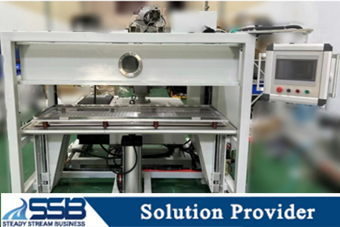
SSB Plasma Cleaning Machine
For applications requiring surface cleaning before coating, SSB provides a Plasma Cleaning Machine for surface-treatment applications on materials including plastics and metals.
View the Plasma Cleaning Machine
Related category: ESG Machinery & Equipment
Plasma cleaning itself does not provide EMI shielding. Its role is surface preparation and cleaning where the selected coating process requires improved surface conditions before the next manufacturing step.
Technical References and EMI Shielding Standards
The following standards are provided as technical scope references. They define different EMC or shielding-effectiveness test conditions and should not be interpreted as certification of a specific EMI coating process:
- MIL-STD-461H — Requirements for the Control of Electromagnetic Interference Characteristics of Subsystems and Equipment. This U.S. Department of Defense interface standard defines EMI emission and susceptibility requirements for applicable electronic, electrical and electromechanical equipment and subsystems. It does not certify a specific coating or conductive paint.
- ASTM D4935-18(2026) — Standard Test Method for Measuring the Electromagnetic Shielding Effectiveness of Planar Materials. The method applies to planar materials under defined far-field conditions and should not automatically be treated as a complete-enclosure test.
- IEEE 299 / IEEE 299.1 family — Measurement methods for the shielding effectiveness of electromagnetic shielding enclosures, as distinct from planar material sample testing. The applicable method and current edition should be confirmed according to enclosure size and project requirements.
Because these standards evaluate different test objects and conditions, engineers should first define whether the project requires material-level shielding effectiveness, enclosure-level shielding performance or subsystem-level EMC compliance.
SSB Technical Scope in EMI Shielding and Surface Engineering
Steady Stream Business (SSB) was established in Kaohsiung, Taiwan in 1987. The company provides integrated support across mold development, machinery equipment, production planning and automation, and its company qualifications include ISO 9001 and D&B D-U-N-S.
SSB's technical content and solution scope cover vacuum sputtering, vacuum coating, surface treatment and EMI shielding-related applications. Rather than selecting a process only by coating price or nominal thickness, SSB evaluates the relationship between substrate, surface preparation, coating structure, manufacturing conditions and mass-production requirements.
For international engineering and procurement teams, this system-integration perspective is particularly useful when EMI shielding must be coordinated with plastic part production, surface treatment, secondary processing and subsequent assembly.
Learn more about SSB's company background and engineering capabilities .
Technical Content by SSB
This article is based on SSB's technical knowledge in plastic injection molding, surface treatment, production equipment and system integration. Actual EMI shielding requirements should be confirmed according to the customer's product design, operating frequency, EMC specification, substrate, grounding structure and applicable validation method.
Related EMI Coating and Surface Engineering Guides
- EMI Coating Technology: Applications of Electromagnetic Shielding Coating in Electronic Components and Military Devices
- Can Vacuum Coating (PVD) Replace Electroplating? Full Technical Comparison & Industry Guide
- Vacuum Metallizing vs. PVD Sputtering Comparison: Surface Coating Guide
Conclusion: Select EMI Shielding by Required Performance, Not by Process Name
The choice between conductive paint and vacuum-deposited EMI coating should not be based on the assumption that one technology is always superior.
For military electronics and other high-reliability electronic products, engineers and buyers should begin with the required shielding effectiveness, frequency range, substrate, enclosure and grounding design, environmental conditions, manufacturing repeatability and validation requirements.
The best EMI shielding solution is the one that consistently achieves the required electrical and environmental performance while remaining practical for mass production and total project cost.
Planning an EMI Shielding or Surface Coating Project?
If you are evaluating EMI coating, conductive paint, vacuum sputtering or another shielding process for plastic or electronic housings, provide SSB with your substrate material, product drawing, required frequency range, shielding target, environmental requirements, production volume and current manufacturing process.
SSB can review the project from surface preparation, coating process, production requirements and mass-production integration perspectives.


